Crime Scene Evidence Checklist: A Practical Guide
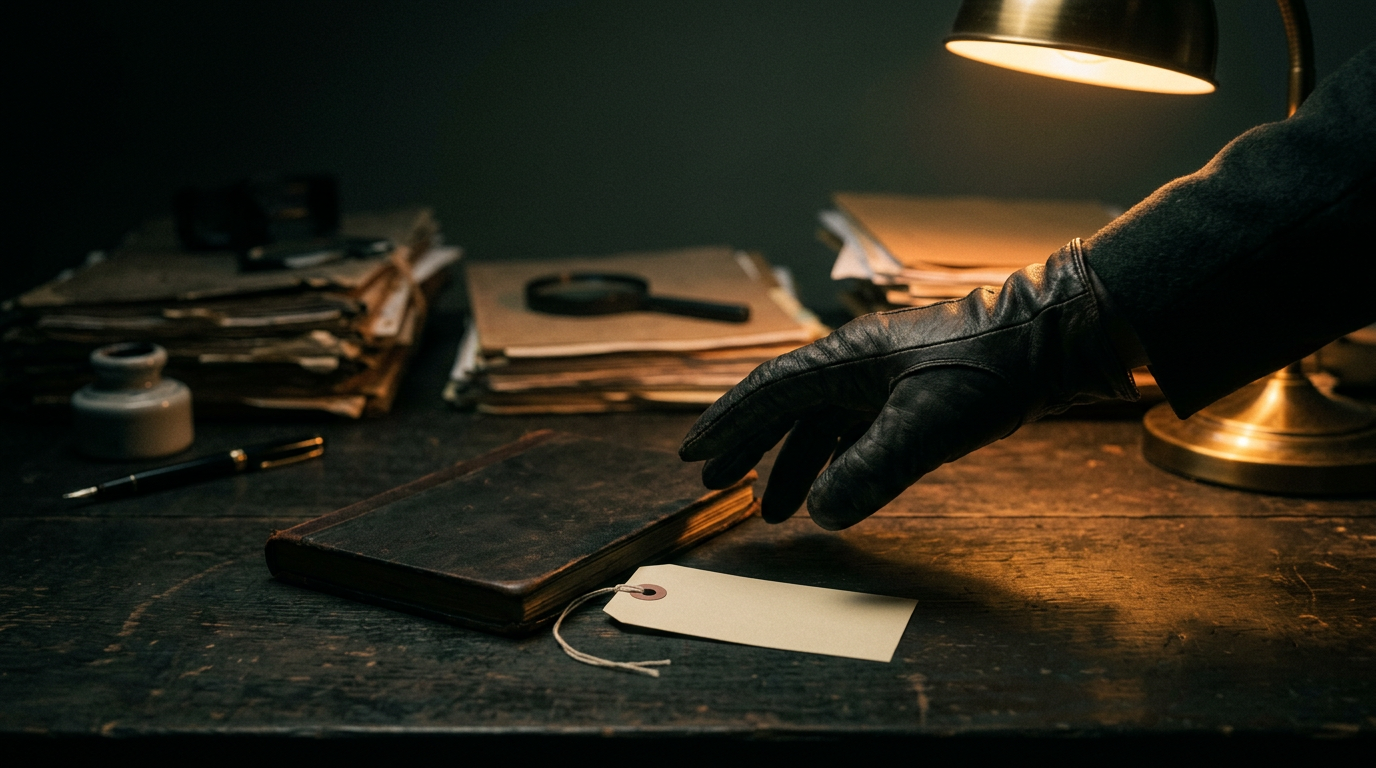
A crime scene evidence checklist is an ordered reminder of what trained investigators may need to secure, document, assess, and track at a scene. It is an educational reference—not permission for the public to touch, collect, or package possible evidence. Real procedures depend on the scene, applicable law, and agency policy.
Key takeaways
- Secure and assess the scene before deciding what evidence may matter.
- Document the scene and items before anything is moved, following professional procedures.
- Evidence can include physical traces, impressions, objects, records, and digital material; not every scene calls for every category.
- Packaging, labeling, and chain-of-custody records help preserve an item’s history.
- If you encounter a real scene, keep away and contact emergency services or the appropriate authorities.
What belongs on a crime scene evidence checklist?
A useful crime scene evidence checklist is not a shopping list of objects to collect. It is a sequence of prompts that helps authorized investigators record decisions and preserve context. The right item to examine depends on the questions under investigation; collecting everything is neither practical nor automatically useful.
The National Institute of Justice (NIJ) guide is written for law enforcement and covers the process from arriving at a scene through equipment considerations. Its central caution is worth keeping in view: investigators should follow agency policy and applicable law. NIJ also describes a scene as a potentially singular opportunity to preserve and recover evidence. That is a reason for careful procedure, not an invitation for bystanders to intervene. Read the NIJ crime-scene investigation guide.
Use the checklist below as a planning and learning aid. It is not an operational protocol, does not replace jurisdiction-specific training, and should not be used to handle real evidence.
Quick reference checklist
- Scene control: Note who is responsible for the scene and whether access is being managed by authorized personnel.
- Initial assessment: Record the scene’s general condition and identify immediate concerns for trained responders.
- Questions to investigate: Define what needs to be established, such as who was present, where people may have gone, or how events fit a timeline.
- Documentation: Record the scene and relevant items in context before movement, using approved methods and procedures.
- Search plan: Choose a systematic approach suited to the location and investigative questions.
- Evidence candidates: Consider relevant objects, impressions, trace material, biological material, documents, and digital sources—without assuming all categories apply.
- Priority: Consider whether any information or material may be transient or at risk of loss, and let trained personnel set priorities.
- Collection and packaging: Follow agency procedures and evidence-specific requirements; do not improvise containers or handling methods.
- Identification: Give each item a unique identifier and record its description and context as required by policy.
- Transfer record: Document custody and any authorized transfer, storage, or submission.
- Final review: Check that required scene notes, images, sketches, item records, and custody documentation are complete.
A model checklist from the National Police Foundation includes scene recording, photographs, labels, seals, and chain-of-custody documentation. It is a useful illustration of how documentation and evidence handling fit together, but its details are not a universal procedure. View the model checklist.
How do investigators work through the checklist?
The sequence below explains the logic of a checklist at a high level. It is not a set of instructions for processing a real scene. Actual work belongs to trained and authorized personnel, who follow local law and agency rules.
1. Secure and assess
First, authorized responders manage access and assess the situation. The purpose is to protect people, control unnecessary disturbance, and understand the scene before detailed examination. A checklist should prompt the team to note relevant arrival and scene information, not encourage an untrained person to enter or investigate.
The specific boundaries and steps depend on the circumstances. A room, a vehicle, and an outdoor location present different concerns. The checklist should therefore capture what was assessed and by whom, rather than assume one fixed layout or approach fits all.
2. Establish the investigative questions
Before deciding what to examine, investigators consider what they need to learn. Questions might concern presence, movement, timing, or whether an account is consistent with the physical setting. Evidence matters in relation to those questions; an object is not automatically meaningful because it is present.
NIST’s process map links evidence decisions with questions such as who was present, where people went, and how events fit a timeline. This is a useful reminder that a checklist should support reasoning, not replace it. See the NIST crime-scene process map.
3. Document before movement
The scene and relevant items need to be recorded in context before they are moved, according to approved procedures. Documentation may include photographs, notes, measurements, or sketches. The aim is to preserve a clear account of what was observed and where, not merely to create a pile of images or a list of objects.
Record the basic context required by policy: for example, the case identifier, location, times, personnel, and what was documented. A VCU Police policy checklist includes arrival time, scene location, case number, collecting officer, photographs, measurements, and removed evidence. Those examples show the kinds of records that may be necessary; they should not be mistaken for a universal form. Review the VCU Police policy.
4. Search systematically and prioritize
Once the scene is documented and a search approach is set, investigators examine relevant areas in a deliberate way. The pattern depends on the location and questions. The practical checklist prompt is simple: record the method used and ensure that coverage is systematic, rather than relying on memory or a casual glance.
Priorities may change where material is transient or vulnerable to loss. NIJ guidance advises prioritizing evidence to reduce loss or destruction and considering transient evidence early. That does not mean every team follows one universal order; it means timing and context should inform decisions made by professionals.
5. Identify, collect, and record custody
When an item is selected for collection, authorized personnel follow evidence-specific and agency procedures. A checklist should prompt a unique item identifier and an accurate record of what the item is, its condition, and where it was found. NIST guidance notes the importance of a unique identifier and a container label that distinguishes the item and describes its condition and location context.
The record continues after collection. It should show who had custody, when transfers occurred, and where the item was stored or submitted, as required. That history helps others assess whether the item remained accounted for. It is not an administrative afterthought; it is part of the evidence record.
What types of evidence may appear on a checklist?
The list below is a set of broad categories, not a promise that every scene contains them or that each one should be collected. Investigators decide relevance and handling under applicable procedures. The distinction matters: a checklist helps identify possibilities; it does not authorize collection.
| Evidence category | Examples of what investigators may consider | Why context matters |
|---|---|---|
| Impressions and patterns | Fingerprints, footwear impressions, or other marks | Location, condition, and surrounding context affect what can be inferred. |
| Biological material | Material that may be suitable for forensic examination | Handling and preservation requirements can be specific; procedures matter. |
| Trace material | Small transferred materials, such as fibres or particles | An apparent trace needs careful documentation and context to be meaningful. |
| Objects and tools | Weapons or other objects relevant to investigative questions | Presence alone does not establish when, how, or by whom an object was used. |
| Firearm-related items | Casings or related objects | Their location and relationship to other observations may matter. |
| Clothing and personal items | Garments or belongings relevant to the investigation | Ownership, condition, and location must be considered rather than assumed. |
| Records and documents | Notes, letters, or other physical records | Authorship, timing, and relationship to the investigation require examination. |
| Digital material | Relevant devices or data sources | Access and preservation are subject to specialist procedures and legal authority. |
The examples of fingerprints, footwear impressions, weapons, casings, trace materials, biological evidence, clothing, and documents appear in institutional guidance and educational sources. VCU Police’s evidence-collection policy is one institutional example. The list remains illustrative: a relevant item in one inquiry may be irrelevant in another.
How do documentation and chain of custody protect evidence?
Documentation connects an item to its location, condition, and the decisions made about it. Without that context, an item may be harder to interpret. A photograph without a location record, or an item label without a meaningful description, can leave unanswered questions about what was observed and when.
A strong record usually has several linked parts, each completed according to local procedure:
- Scene record: location, case identifier, relevant times, and personnel.
- Visual and written record: photographs, notes, measurements, or sketches that document context.
- Item record: unique identifier, description, condition, and location information.
- Handling record: collection details and the people responsible for authorized transfers.
- Submission or storage record: information showing where the item went next.
Chain of custody is the documented history of who handled or controlled an item and when. It helps establish continuity and accountability from collection through storage, examination, or other authorized transfer. A checklist can remind a team to complete the record, but it cannot make a poorly documented transfer disappear.
Packaging and labeling also depend on the item and the applicable agency’s requirements. The National Police Foundation model checklist emphasizes photographing items before collection, labeling packages, sealing them, and documenting custody. It also points readers toward jurisdiction- or department-specific packaging guidance. Treat those points as reminders to consult the governing procedure, not as a do-it-yourself packing guide.
What common checklist mistakes should you avoid?
Treating the list as universal. Scenes, evidence types, laws, and agency rules differ. A checklist is a prompt to ask what applies, not a command to perform every listed action.
Confusing “notice” with “collect.” Seeing an object that might matter does not authorize anyone to touch or move it. For members of the public, the safest action is to stay clear and contact the proper authorities.
Recording items without context. An object’s location, condition, and relationship to the scene can matter as much as its name. Documentation should preserve those details before any authorized movement.
Assuming a photograph is the whole record. Images can help show context, but notes, measurements, sketches, labels, and custody records may also be required. The record should follow local policy.
Treating every object as equally important. Relevance depends on investigative questions and the scene. A structured process helps teams decide what to prioritize rather than collecting indiscriminately.
Forgetting that handling can affect integrity. Contamination is a reason trained personnel use controlled procedures and appropriate safeguards. A checklist should remind authorized staff to follow them; it should not teach the public to process a scene.
For anyone who finds a possible real-world scene, do not investigate, handle objects, or try to preserve evidence yourself. Move to a safe place and contact emergency services or the appropriate authorities. This guide is for general understanding, not emergency response or professional training.
How does a real checklist differ from a detective game?
A real crime scene checklist supports authorized work under law, training, and agency policy. A detective game offers a fictional investigation. The two may share an interest in timelines, statements, and evidence, but playing a game does not teach operational evidence collection—and a real scene is not a puzzle to explore.
In CaseZero, players inspect fictional evidence, question AI-driven suspects, compare statements, build a timeline, and make one accusation. If you want to practise the logic of a fictional case, try the free case #0001 The Last Guest; it requires no account. For another option, Case Pack 01 includes The Silent Floor, Dead Letter, and The Second Key for €12.99. These are game experiences, not real-world investigative training.
For more on the reasoning side of whodunnits, see our guide to how to solve a murder mystery. The case may be fictional. The discipline of separating what is known from what is merely suspected is useful in any mystery.
A good crime scene evidence checklist keeps the order clear: assess, document, search, evaluate, and record custody—under the right authority and procedures. It helps explain what evidence work involves, but it is not a license to handle a real scene. If you prefer your investigations safely fictional, start with CaseZero’s free The Last Guest.
This video is hosted by YouTube. Loading it shares your IP address with Google and may set cookies.
Questions from the squad room
What should be on a crime scene evidence checklist?
A general checklist can prompt scene control, initial assessment, investigative questions, documentation, a systematic search plan, possible evidence categories, prioritization, item identification, and custody records. The details must follow applicable law and agency policy. It is an educational outline, not a universal operational protocol or permission for the public to collect evidence.
What types of evidence can be found at a crime scene?
Depending on the circumstances, investigators may consider impressions, biological or trace material, objects, firearm-related items, clothing, documents, and digital sources. No scene necessarily contains all of these, and an item’s presence does not by itself establish its meaning. Trained personnel determine relevance and handling under the rules that apply.
What should be documented before evidence is moved?
Authorized personnel may need to record the scene and relevant items in context, including location, condition, and associated case information. Photographs, notes, measurements, or sketches may form part of the record under local procedure. The exact requirements vary; this is not advice for a bystander to approach or document a real scene.
What is chain of custody?
Chain of custody is the documented history of who had control of an evidence item and when. It records authorized handling and transfers, along with relevant storage or submission information. Keeping that history clear supports accountability and helps others evaluate continuity. Specific forms and processes depend on the jurisdiction and agency.
How do investigators avoid contamination?
Investigators use training, scene controls, and evidence-specific procedures set by their agency to reduce the risk of contamination or loss. Checklists may prompt personnel to follow those safeguards, but they cannot replace training or local requirements. Members of the public should not handle, move, or attempt to package possible evidence.
More from the Casebook
 Detective guides · 22 Nov 2026 · 10 min
How to Build a Murder Investigation Timeline
Learn how to build a murder investigation timeline with traceable sources, honest time ranges, and a practical template for finding gaps and conflicts.
Read the file Detective guides · 21 Nov 2026 · 10 min
How to Spot Contradictions in Witness Statements
Learn how to spot contradictions in witness statements with a clear comparison method, timeline checks, and neutral follow-up questions.
Read the file Detective guides · 17 Nov 2026 · 11 min
How to Solve a Murder Mystery Puzzle: A Practical Method
Learn how to solve a murder mystery puzzle with a clear method for sorting clues, checking alibis, building a timeline and making a fair accusation.
Read the file